Skip to content
AGENCY
Pillar 05 of 06/ Full business overhaul

Pillar 05 / Operations portals and business software

Custom operations portals and business software built around the way you work.

A customer facing website helps people choose the company. An operations portal helps the team deliver the work behind it. We build custom dashboards, portals, CRMs, and tracking around the way your business actually operates, and connect them to the website, acquisition, and AI automation where the plan calls for it.

A different audience

Your customers need one experience. Your team needs another.

Customer relationship management software, often called a CRM, helps organize the people and activity around the business. A custom operations app can go further into the workflow when the way you work does not fit a standard product.

The starting point is the daily reality: where information lives, who needs it, what gets repeated, and where work loses momentum. That defines the interface and functionality. The software should make the agreed workflow clearer and easier to manage.

Public website

Explain the business, demonstrate the offer, and provide a useful path for a customer to call, order, request a quote, or make an inquiry.

Private operations software

Support the team and the information it needs to carry out work. Access, workflows, and functionality are defined around the engagement.

Is this the right starting point?

Custom software, an existing platform, or a better process first.

A custom operations app makes sense when your team's work does not fit the shape of standard software, such as production stages, job tracking, or views for different roles, and the workarounds cost real time. If an established CRM or scheduling tool already fits most of the process, implementing it well is usually simpler to maintain.

A good fit when

  • Your team tracks the same job across spreadsheets, messages, and memory.
  • Different roles need different views of the same work, such as office, production, and field staff.
  • You have tried standard tools and keep building workarounds around them.
  • The workflow is stable enough to describe, even if it is messy today.

Start elsewhere when

  • A standard CRM or scheduling platform already covers most of what you need.
  • The process changes every week and nobody has agreed how it should work.
  • The core requirement is payments, accounting, or regulated records, which usually belong with an established provider connected to the app.

Practical limits to plan around

  • Custom software needs hosting, maintenance, and someone responsible for changes after launch. That belongs in the scope from the start.
  • Connections to other tools depend on what those tools allow through their interfaces and plans. Compatibility is checked during scoping.
  • Mobile access usually means a responsive web app. App store distribution is a separate decision with its own requirements.
  • Private screens stay private. Examples on this site use approved recordings and descriptions, never customer records.

Often compared with

Pillar 05 of 06 / Full business overhaul

This is one piece of the bigger system.

Custom Operations Portals & Business Software: The private system where the work behind every sale gets done. Our services are available individually, but the greatest integration opportunities often emerge when your website, marketing, software, and operations work together.

Actual client work

Built for a manufacturer. Built for a drain company.

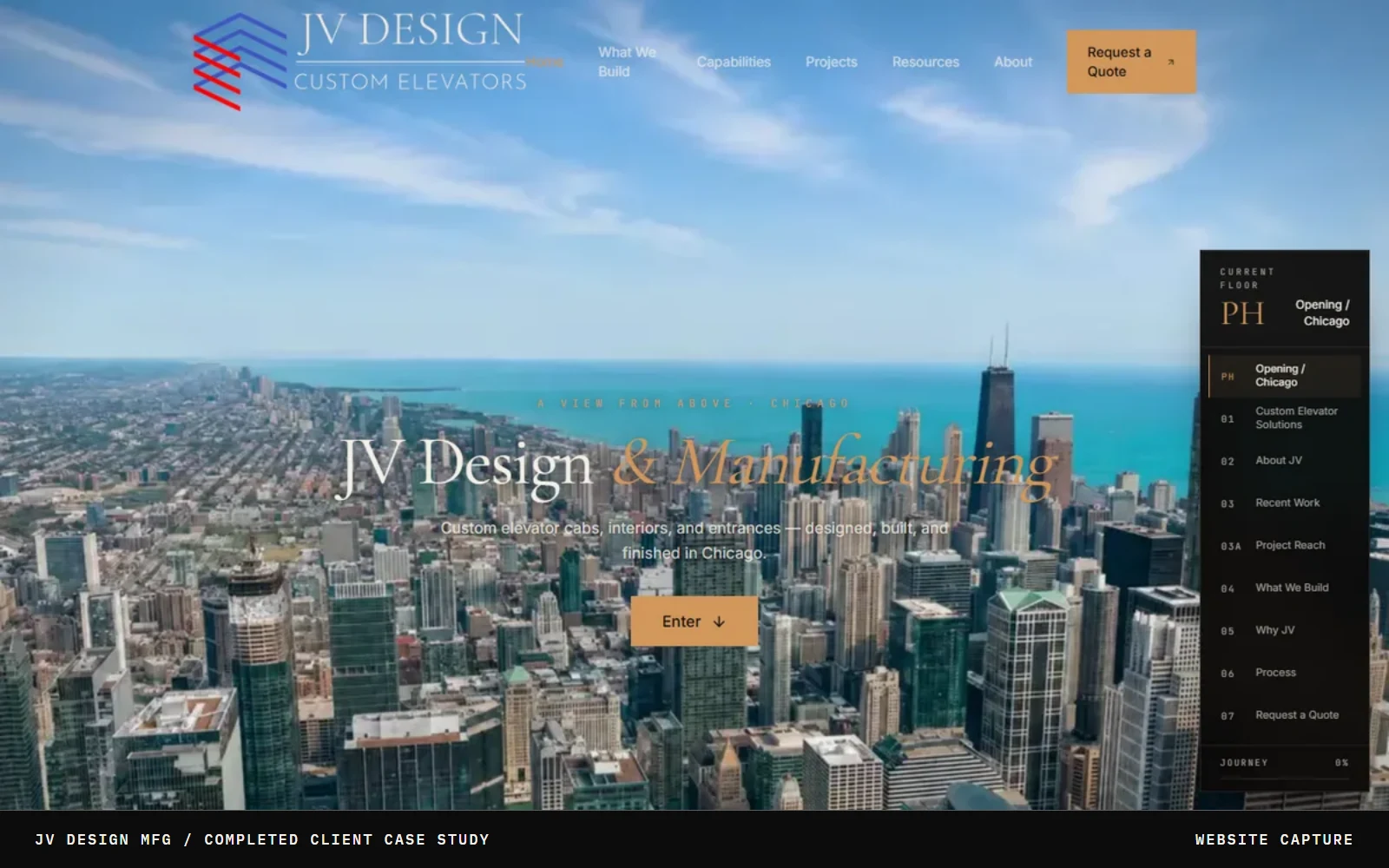
JV Design MFG has its own custom mobile and web operations app alongside its specialist manufacturing website. The public experience helps buyers evaluate capabilities and project work; the separate app is tailored to the business behind that experience.

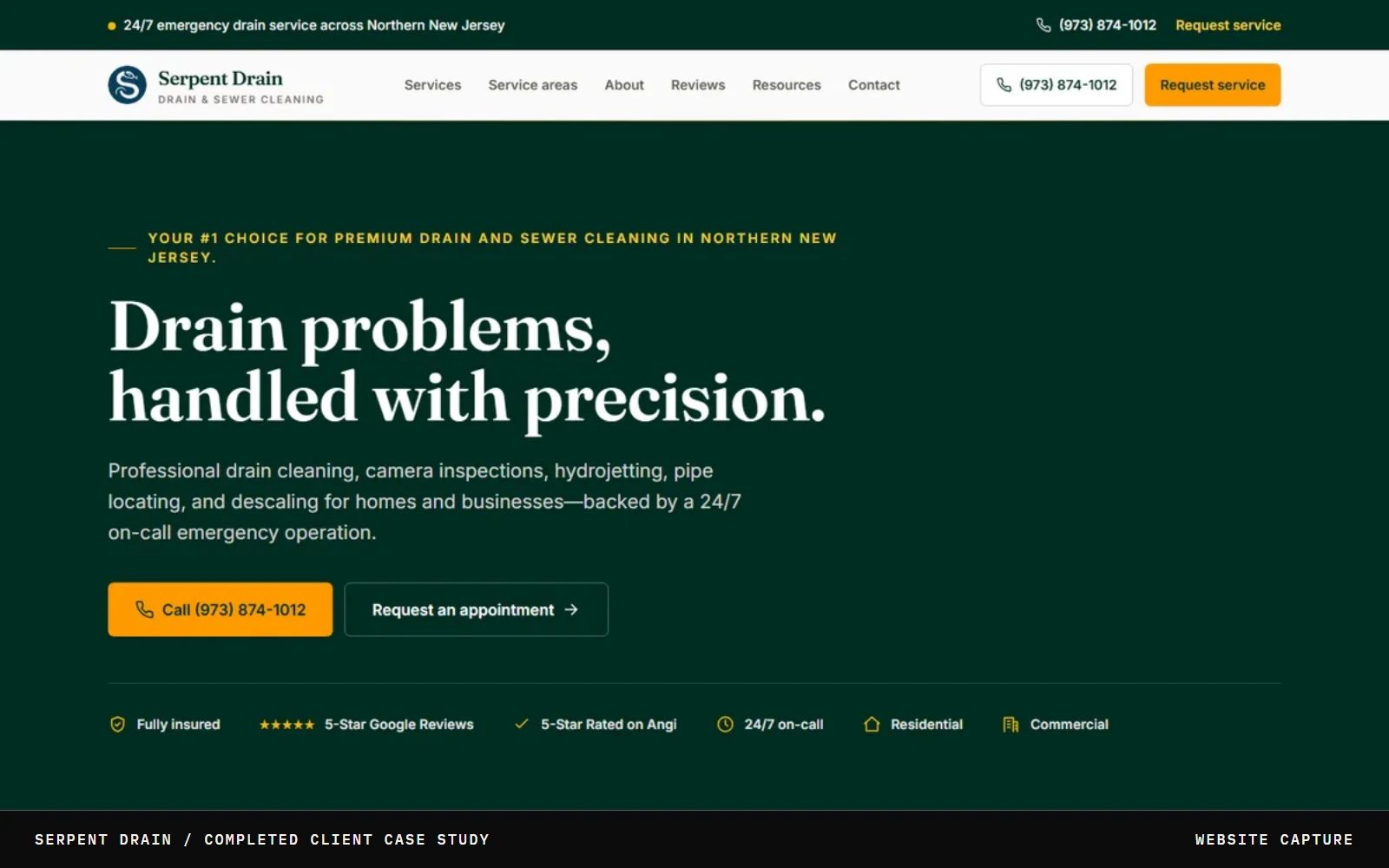
Serpent Drain also has its own custom mobile and web operations app. Its website helps customers find service information and request help, while the operations software serves the company's internal needs. These are distinct client systems, not a generic dashboard presented as two projects.

Planning something larger? The flagship industry programs show how operations software is scoped inside a full overhaul: field ticketing and billing handoffs for oilfield service companies, RFQs and customer portals for manufacturers, live slab inventory for natural stone wholesalers, and bid and closeout workflows for data center builders.

Scope before software

Define the workflow before adding the features.

  1. 01

    Map the current process

    Understand the team, the information it works with, existing tools, and the moments where work becomes unclear or repetitive.

  2. 02

    Choose the right approach

    Compare adapting a standard CRM, connecting existing tools, and building custom software. Custom development is useful when the business needs justify it.

  3. 03

    Build the agreed system

    Design and implement the scoped screens, data handling, access rules, and workflows, with testing around real tasks and appropriate permissions.

  4. 04

    Plan its continued operation

    Agree on hosting, support, maintenance, documentation, and changes before launch. Software needs an owner and a plan after the first release.

Pillar 05 / What it can include

The work can extend where the business needs it.

Examples of what we scope and build, not a feature inventory for the JV Design or Serpent portals. A website and an operations portal can also exist separately; a direct connection between them is designed and verified when it is part of the project.

  • Internal business dashboards
  • Employee and management portals
  • Custom CRM systems
  • Customer databases
  • Job tracking and project management
  • Scheduling and booking software
  • Ecommerce operations dashboards
  • Order tracking and fulfillment
  • Inventory and production tracking
  • Automated reporting
  • Role based employee permissions
  • Financial and operational visibility
  • Integrations with existing business platforms

Every system is scoped to one business. Not every capability is part of every build.

Related projects

The JV Design MFG and Serpent Drain portals, and Magpie Operations, a working system in active development with each capability labeled.

JV Design MFG website capture
Completed Client Case Study

Manufacturing / Custom Elevator Components

JV Design MFG

A custom website, SEO and AEO, and a mobile and web operations portal for a specialist elevator component manufacturer that reports six figure projects through its website.

Six figureProjects received through the website · Owner reported

  • Websites
  • SEO & AEO
  • Operations Software
Serpent Drain website capture
Completed Client Case Study

Home Services / Drain & Sewer

Serpent Drain

A custom drain and sewer website, SEO, AEO, and local search work, plus a custom operations portal, for a service business now reporting inquiries from search and AI discovery.

New jobsInquiries and jobs from search and AI discovery · Owner reported

  • Websites
  • SEO & AEO
  • Operations Software
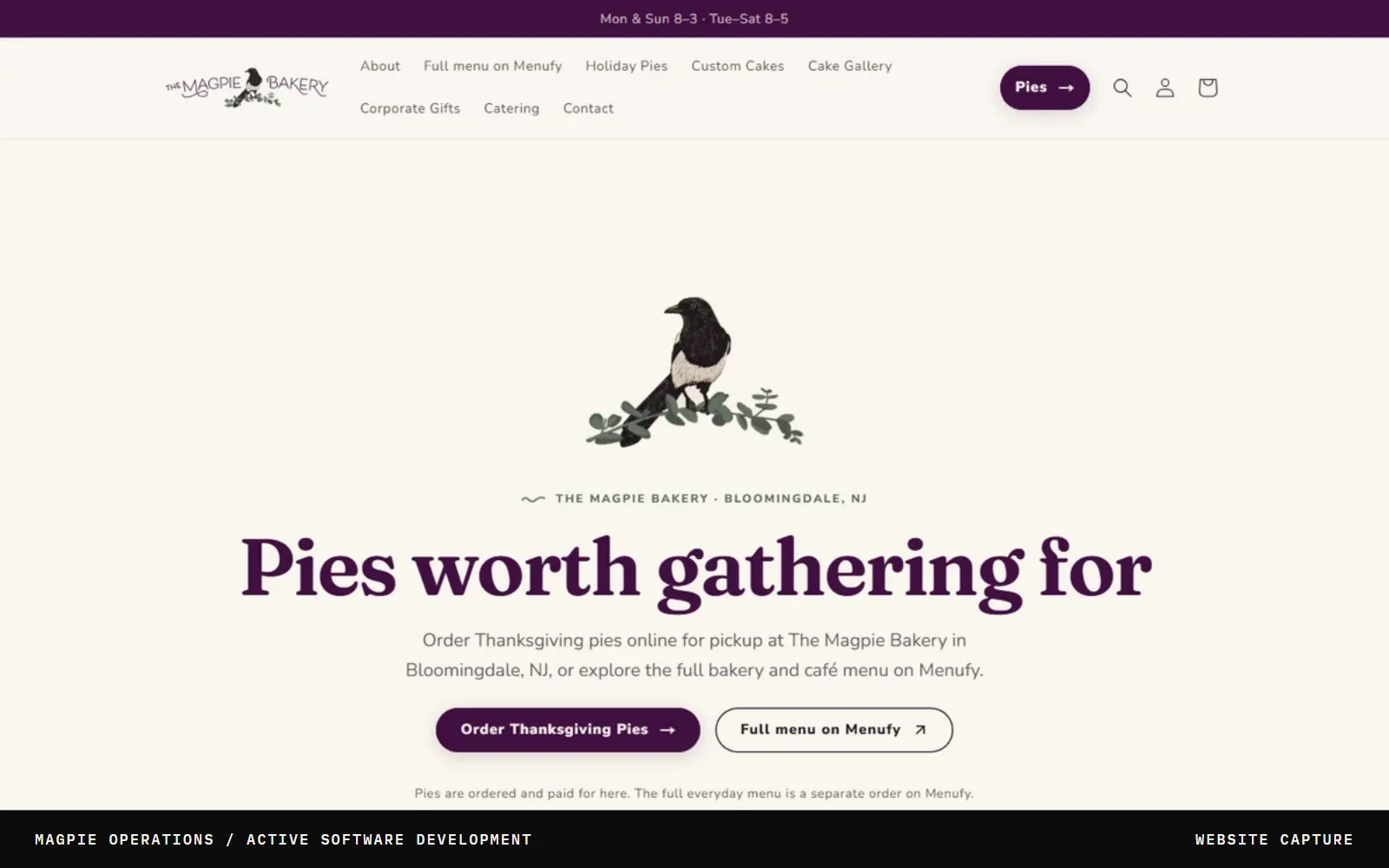
Magpie Bakery public website shown as business context for its operations project
Active Software Development

Bakery / Custom Business Software

Magpie Operations

A custom operations application for Magpie Bakery connecting front of house, kitchen, order management, and pickup. Working, and still being developed.

  • Operations Software

Status labels describe each project. Results are owner reported, and a demo or concept shows design and development, not a launched engagement or business results.

Custom Operations Apps questions

Choose the system that fits the work.

How is custom software different from a standard CRM?

A standard CRM provides established features through a licensed product. Custom software can be designed around more specific screens, information, and workflows. We compare the approaches before choosing one; familiar off the shelf software may be the more practical fit.

Does mobile mean an app store app?

Not automatically. Mobile access might use a responsive web app or another delivery approach. Device needs, offline requirements, notifications, and distribution determine the scope. App store distribution is not implied by a mobile operations app.

Can you connect tools we already use?

We assess their available interfaces, permissions, data, and ongoing costs. Some connections are straightforward; others need custom work or have restrictions. No integration is assumed until it has been evaluated and included in the scope.

Do we have to buy a new website first?

No. Operations software can be its own engagement when there is a clear business need, or one pillar of a full business overhaul alongside the website, acquisition, and automation.

What affects the budget?

Workflow complexity, user access, data migration, integrations, mobile requirements, testing, and ongoing operation affect the work. Hosting, third party licenses, support, and ownership terms are discussed explicitly.

Next step

Show us where the work gets difficult.

Bring the spreadsheet, the repeated task, or the process that no longer fits the business. We can discuss whether existing software, a connection, or a custom app makes sense.